Growing Fruit
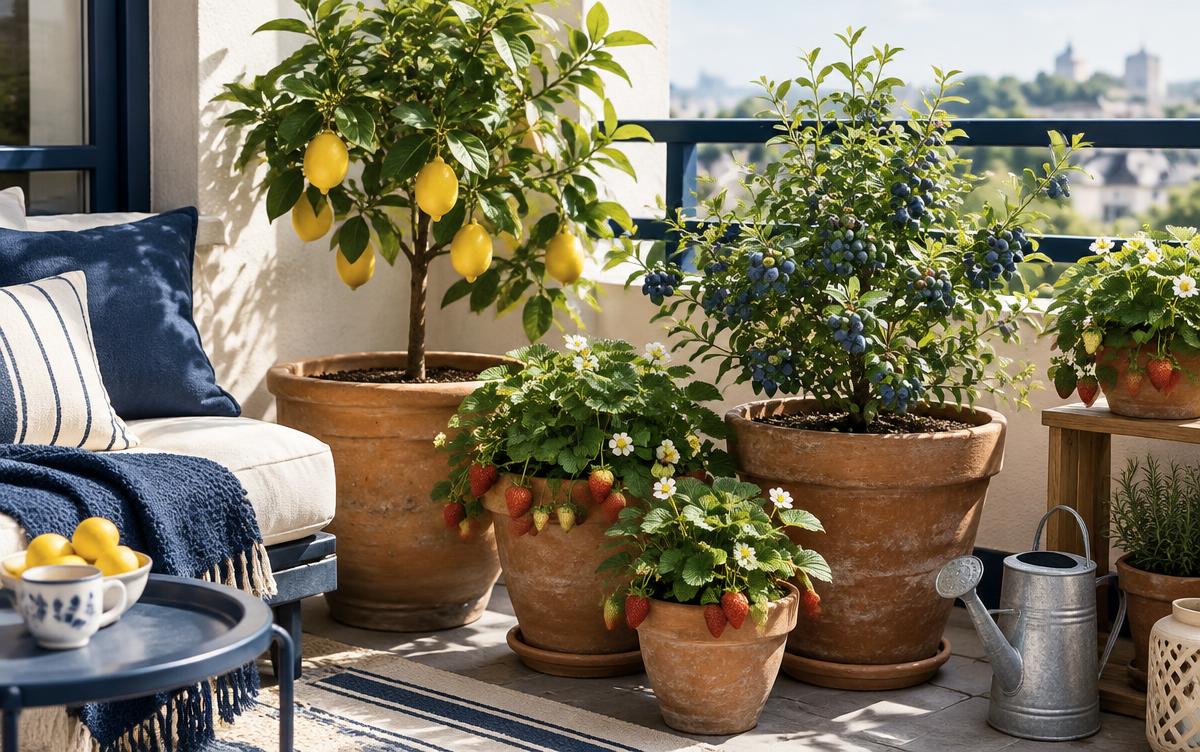
Growing Fruit in Containers: A Beginner's Guide
Which fruits grow well in pots, how to choose containers, soil and feeding for a balcony harvest.
El Madhoun Mohamed · June 18, 2026 · 8 min read
Growing Fruit
Grow lemons in a pot: the best compact varieties, container and soil, light needs, watering, feeding, bringing trees indoors for winter, and fixing common problems like leaf drop.
By Frutino Editorial Team · Published October 27, 2026 · 8 min read
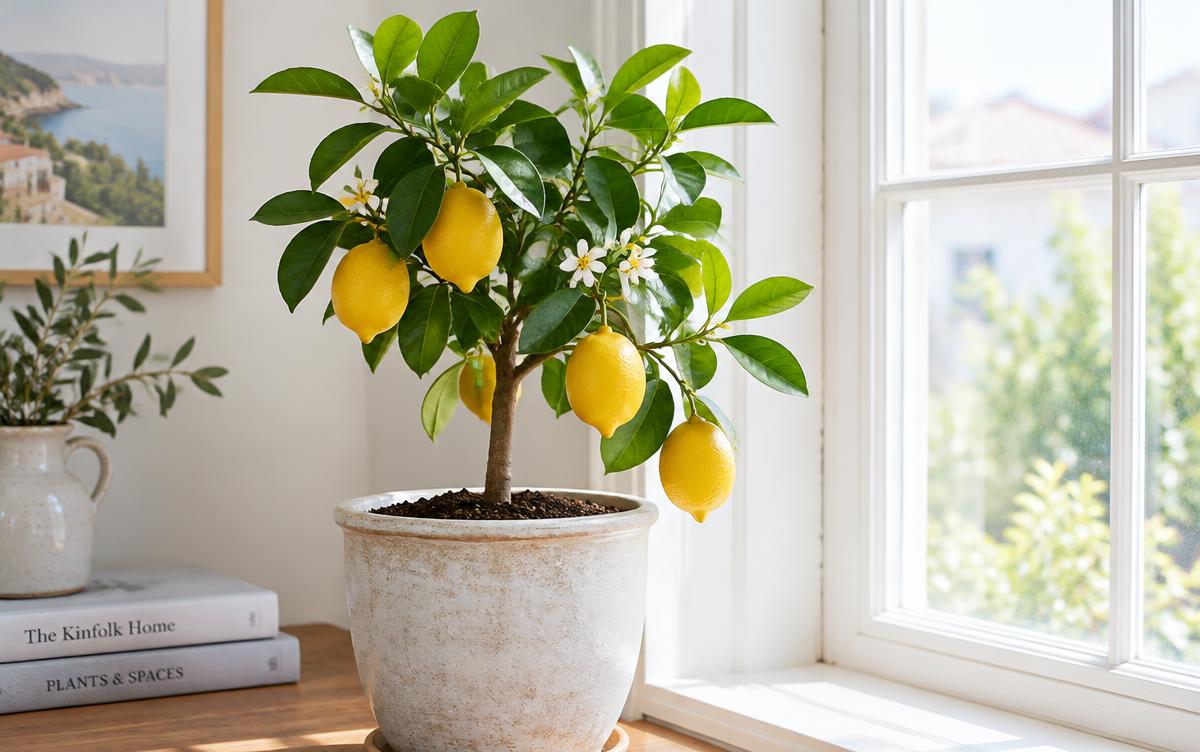
A lemon tree in a pot brings fragrant blossom and fresh fruit to a patio — even where winters are too cold for citrus to survive outdoors. Because the container can move indoors when temperatures drop, lemons are among the most rewarding fruit trees for small spaces. This guide covers variety, soil, light, water, feeding and overwintering.
Choose a compact or dwarf tree grafted onto dwarfing rootstock:
Start with a pot 12–16 inches (30–40 cm) wide with generous drainage holes, moving up a size every two to three years. Citrus roots need air as well as water, so use a fast-draining potting mix formulated for citrus or cacti, or add pine bark and perlite to standard potting mix. Never let the pot sit in a saucer of water.
Lemons need bright light — ideally eight or more hours of direct sun outdoors in summer. Indoors, place the tree at the sunniest south- or southwest-facing window, or supplement with a grow light. Most lemons are damaged below about 32°F (0°C); bring them inside before the first frost and move them back outdoors gradually in spring to avoid leaf scorch.
Water thoroughly when the top 1–2 inches of soil feel dry, then let excess drain. Overwatering is the most common cause of failure in potted citrus. Trees need less water indoors in winter and much more on hot summer days.
Container citrus quickly uses up nutrients. Feed from spring to late summer with a citrus fertilizer that includes micronutrients such as iron, zinc and manganese, following label directions. Reduce or stop feeding in winter when growth slows.
Most lemons are self-fertile. Outdoors, insects pollinate the flowers; indoors, gently transfer pollen between open blossoms with a small paintbrush. Lemons take six to nine months to ripen and can hang on the tree for weeks once yellow, so pick as needed.
Quick fixes for frequent issues:
A grafted nursery tree often fruits within one to three years. Trees grown from seed can take many years and may not produce true-to-type fruit.
Yes, with very bright light, but trees are usually healthier and more productive when they spend summer outdoors.
Water when the top inch or two of soil is dry; frequency varies with temperature, light and pot size.
Light pruning to shape the tree and remove dead or crossing branches is enough. Remove shoots growing from below the graft.
This article is for general information only and isn't a substitute for professional medical advice. See our disclaimer.
Growing Fruit
Which fruits grow well in pots, how to choose containers, soil and feeding for a balcony harvest.
El Madhoun Mohamed · June 18, 2026 · 8 min read
Seasonal Guides
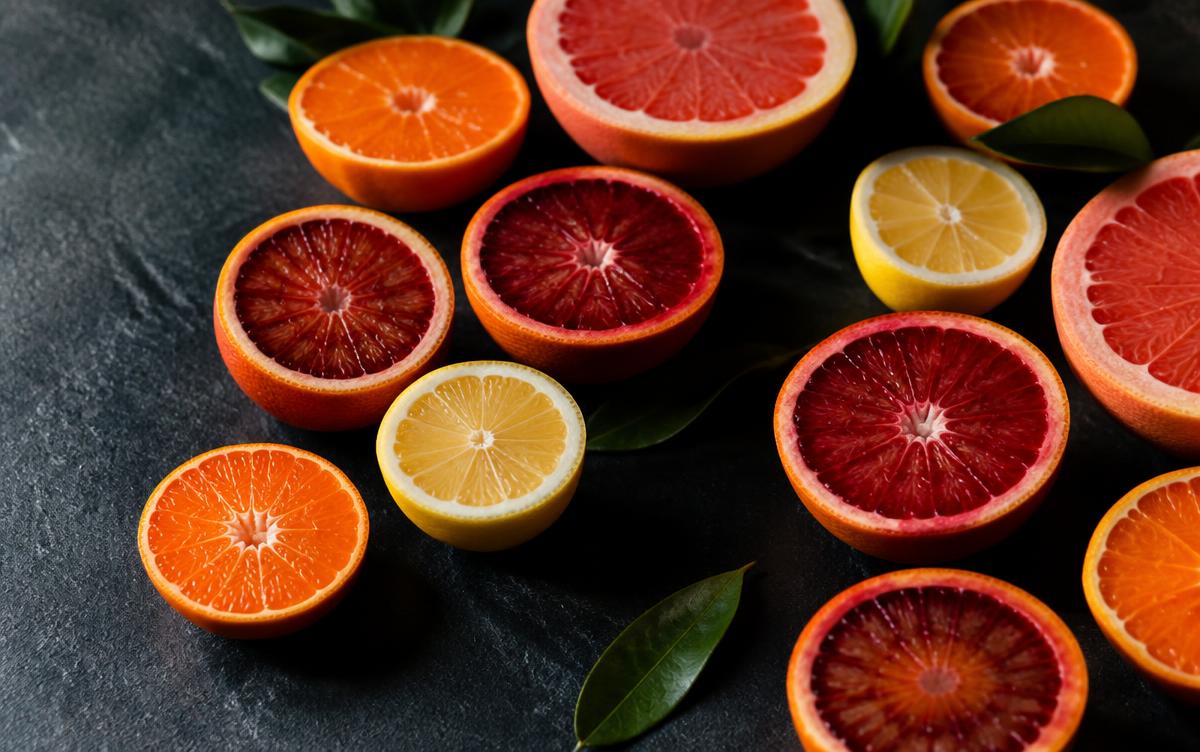
Discover the best citrus varieties of the cold season, how to pick juicy fruit, how to store it, and easy ways to use every part.
El Madhoun Mohamed · September 28, 2026 · 9 min read
Growing Fruit
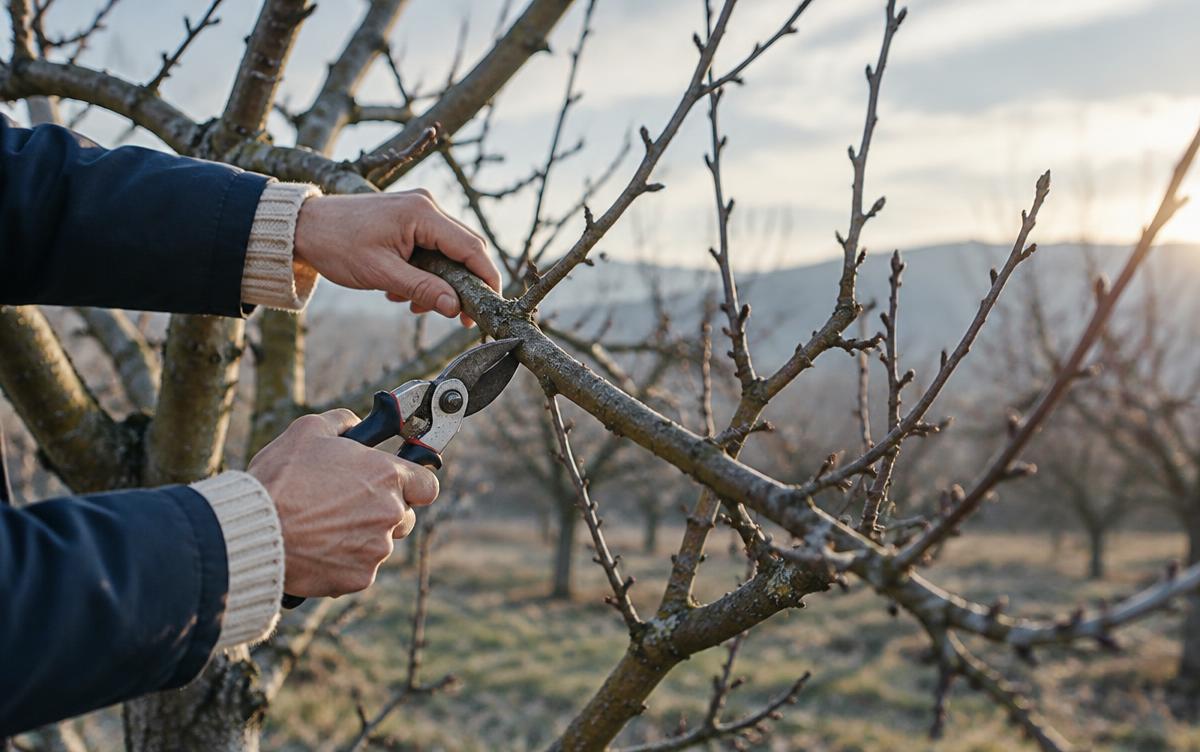
When and how to prune apple, pear and stone fruit trees for healthier growth and better harvests.
El Madhoun Mohamed · May 25, 2026 · 7 min read