Learn how to choose a sweet, ripe watermelon using the field spot, weight and sound, plus watermelon nutrition, hydration facts and how long cut watermelon lasts.
Watermelon does not continue to sweeten after it is picked, so choosing a good one at the store matters. The good news is that a few simple checks — the field spot, the weight and the shape — greatly improve your odds. This guide covers how to pick a ripe watermelon, what it offers nutritionally, and how to store it safely once cut.
How to pick a ripe watermelon
Unlike bananas or avocados, watermelon is non-climacteric: it will not become sweeter on your counter. Look for these signs before buying:
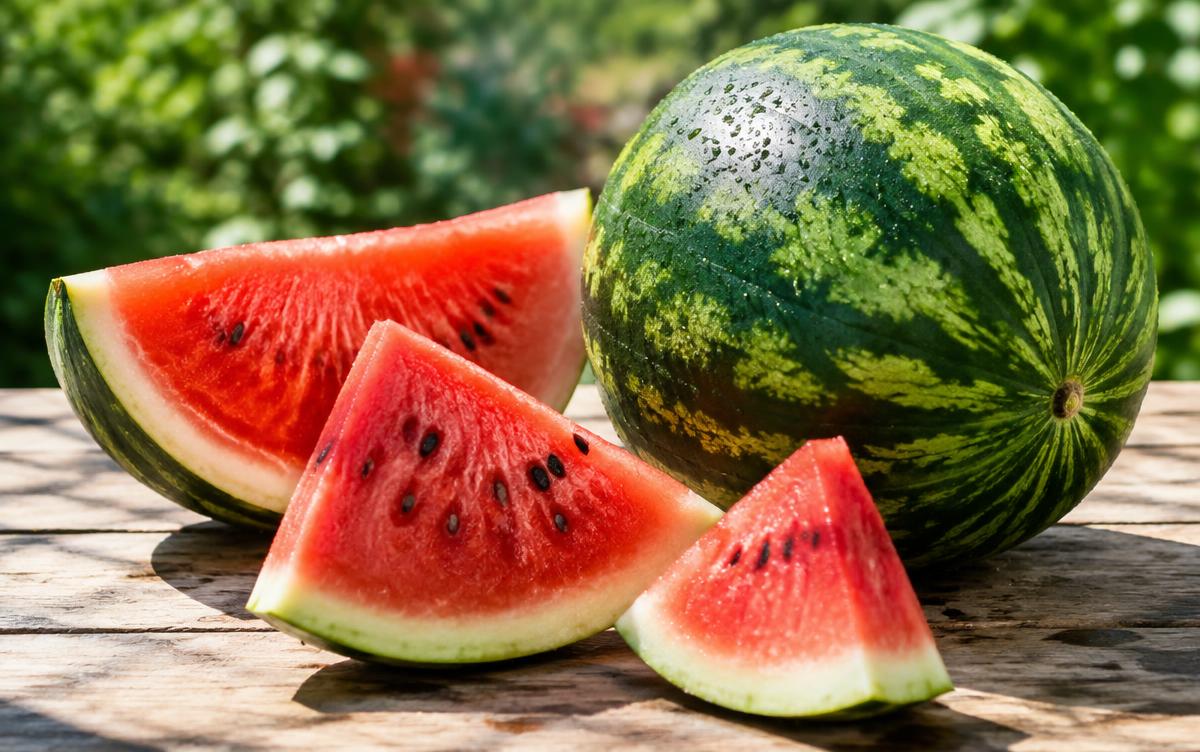
- Field spot: a creamy yellow patch where the melon rested on the ground suggests it ripened on the vine. A white or pale green spot often means it was picked early.
- Weight: a ripe watermelon feels heavy for its size because it is full of water.
- Shape: choose a symmetrical melon without cuts, soft spots or dents.
- Skin: a dull rather than very shiny rind is often a sign of ripeness.
- Sound: a deep, hollow sound when tapped is a traditional clue, though it is less reliable than the field spot.
Watermelon nutrition
Watermelon is about 92% water. According to USDA data, one cup of diced watermelon (about 150 g) contains around 45–46 calories and about 11–12 g of carbohydrate, with small amounts of vitamin C, vitamin A and potassium. Red watermelon is also a source of lycopene, the pigment that gives it its color.
Because it is mostly water and relatively low in calories, watermelon adds volume and hydration to summer meals. It is low in fiber, so pairing it with yogurt, nuts or a meal can make it more filling.
How to store watermelon
Whole, uncut watermelon can be kept at room temperature for about a week, or refrigerated to extend its life a little. Always wash the rind before cutting, because a knife can carry surface bacteria into the flesh.
Once cut, refrigerate watermelon promptly in a covered container. Food safety guidance recommends not leaving cut melon at room temperature for more than two hours (one hour in very hot weather). Cut watermelon usually keeps three to five days in the fridge.
Can you freeze watermelon?
Yes, but freezing changes its texture. Frozen watermelon cubes are best used in smoothies, slushies or as ice cubes in drinks rather than eaten as fresh fruit after thawing.
Frequently asked questions
Does watermelon ripen after being picked?
No. Watermelon does not get sweeter after harvest, which is why choosing a ripe one at the store matters.
Is watermelon high in sugar?
Watermelon tastes sweet but is mostly water. One cup contains roughly 9–10 g of natural sugar, comparable to many other fruits per serving.
How long does cut watermelon last?
Stored covered in the refrigerator, cut watermelon generally keeps for three to five days.
Are seedless watermelons genetically modified?
No. Seedless watermelons are produced through conventional breeding methods, not genetic engineering.
Sources and further reading
This article is for general information only and isn't a substitute for professional medical advice. See our disclaimer.