Buying Guides
How to Choose Ripe Fruit at the Store: A Fruit-by-Fruit Guide
Look, smell and touch tests for picking ripe melons, avocados, pineapples, berries and more.
Claire Moreau · September 25, 2026 · 8 min read
Buying Guides
From Granny Smith to Honeycrisp: how the main apple varieties differ in sweetness, texture and use — and how to pick and keep them at their best.
By Claire Moreau, Registered Dietitian & Senior Food Researcher · Updated October 9, 2026 · 8 min read · Fact-checked
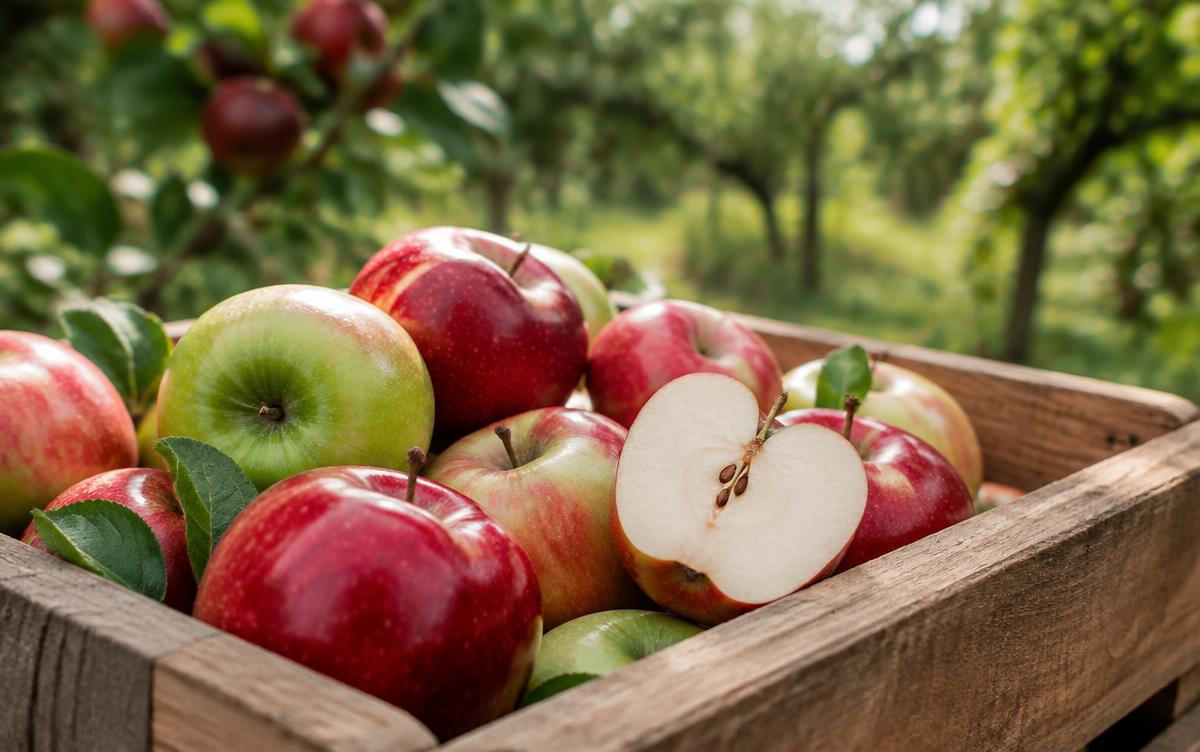
Walk into any supermarket and you will find half a dozen apple varieties that look similar but behave very differently. One turns to fluff in a pie, another stays crisp for months, a third is all sugar and no acidity. Knowing the main types — and what each is for — means better snacks, better baking and less disappointment.
Every variety sits somewhere on three scales: sweetness versus acidity, crispness versus softness, and juiciness. A great eating apple balances sugar and acid with a crisp, juicy bite. A great cooking apple holds its shape or breaks down into a smooth purée, depending on the dish, and usually carries enough acidity to keep the flavor lively after cooking.
Here is a practical guide to the apples you are most likely to meet:
For eating raw, choose whatever balance of sweet and sharp you enjoy — but prioritize crispness, because a mealy apple pleases no one. For pies and tarts where you want distinct slices, use firm varieties like Granny Smith, Braeburn or Honeycrisp. For sauce, butter and purées, use apples that collapse readily, such as Golden Delicious or Bramley. For salads, pick slow-browning types like Pink Lady, or toss cut apples in a little lemon juice.
Many bakers use two varieties in one pie — one that holds its shape and one that melts — to get both texture and a silky filling.
Whatever the variety, the same checks apply:
Apples keep far longer than most fruit — but only if you treat them right. They ripen fastest at room temperature and slowest just above freezing. A cool fridge drawer keeps most varieties crisp for four to six weeks. Store them away from other produce, because apples are heavy ethylene producers and will hurry everything around them toward spoiling.
If you buy in bulk in autumn, traditional advice still holds: wrap each apple in paper, keep them in a cool dark place, and check weekly for rot — one bad apple really does spoil the bunch.
A medium apple gives about 95 calories, 4 g of fiber and a useful dose of vitamin C, plus polyphenols concentrated in and near the skin. Much of the fiber is pectin, a soluble fiber that supports gut health and helps moderate the absorption of the apple's natural sugars. Eat the skin when you can — peeling throws away a meaningful share of the fiber and antioxidants.
Any apple you enjoy. All varieties are around 80–100 calories each with similar fiber, so pick the one you will actually eat instead of a sweeter snack.
Enzymes in the flesh react with oxygen. A squeeze of lemon juice or a brief dip in salted water slows browning noticeably.
For anything beyond a few days, yes. Apples soften about ten times faster at room temperature than in the fridge.
Nutritionally they are very similar. Washing conventional apples well removes most surface residues; buy organic if it fits your budget and priorities, not out of fear.
This article is for general information only and isn't a substitute for professional medical advice. See our disclaimer.
Buying Guides
Look, smell and touch tests for picking ripe melons, avocados, pineapples, berries and more.
Claire Moreau · September 25, 2026 · 8 min read
Seasonal Guides
A month-by-month guide to fruit at its peak in the Northern Hemisphere, with tips for buying in season.
Claire Moreau · August 28, 2026 · 9 min read