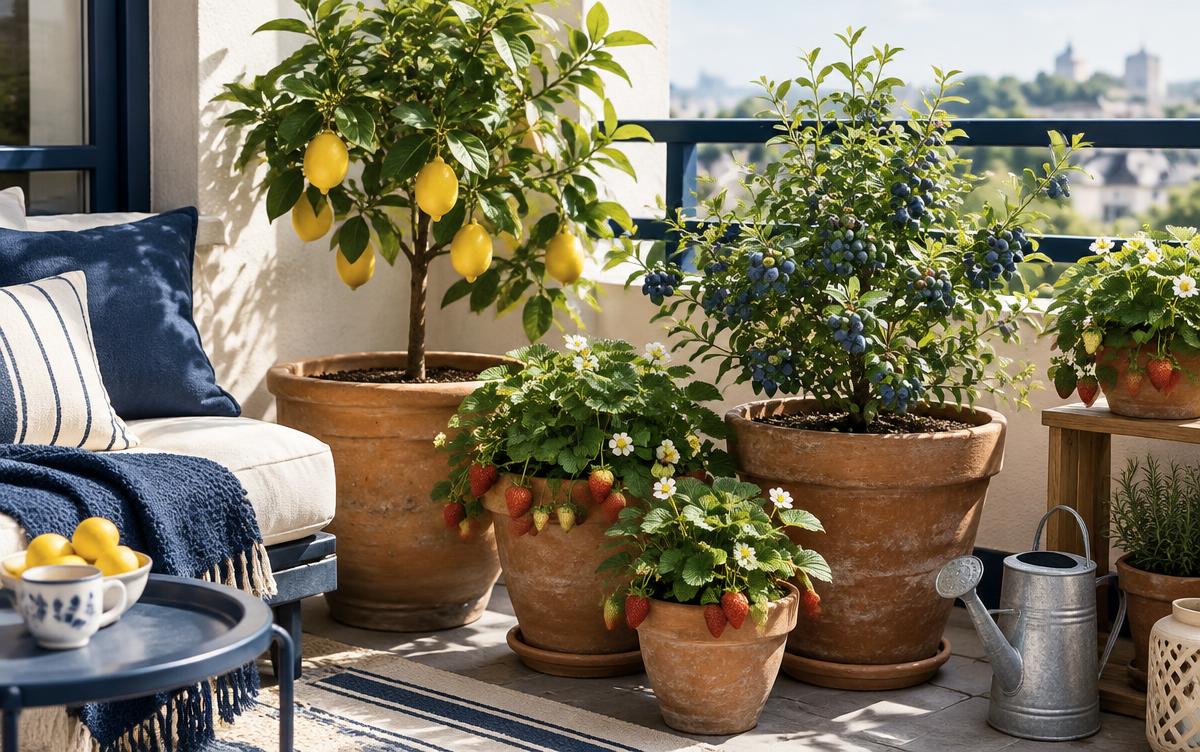
Growing Fruit
Growing Fruit in Containers: A Beginner's Guide
Which fruits grow well in pots, how to choose containers, soil and feeding for a balcony harvest.
El Madhoun Mohamed · June 18, 2026 · 8 min read
Growing Fruit
How to grow blueberries in containers: choosing varieties, mixing acidic soil, pot size, sunlight, watering, feeding and pruning for a steady harvest on a balcony or patio.
By Frutino Editorial Team · Published October 24, 2026 · 8 min read
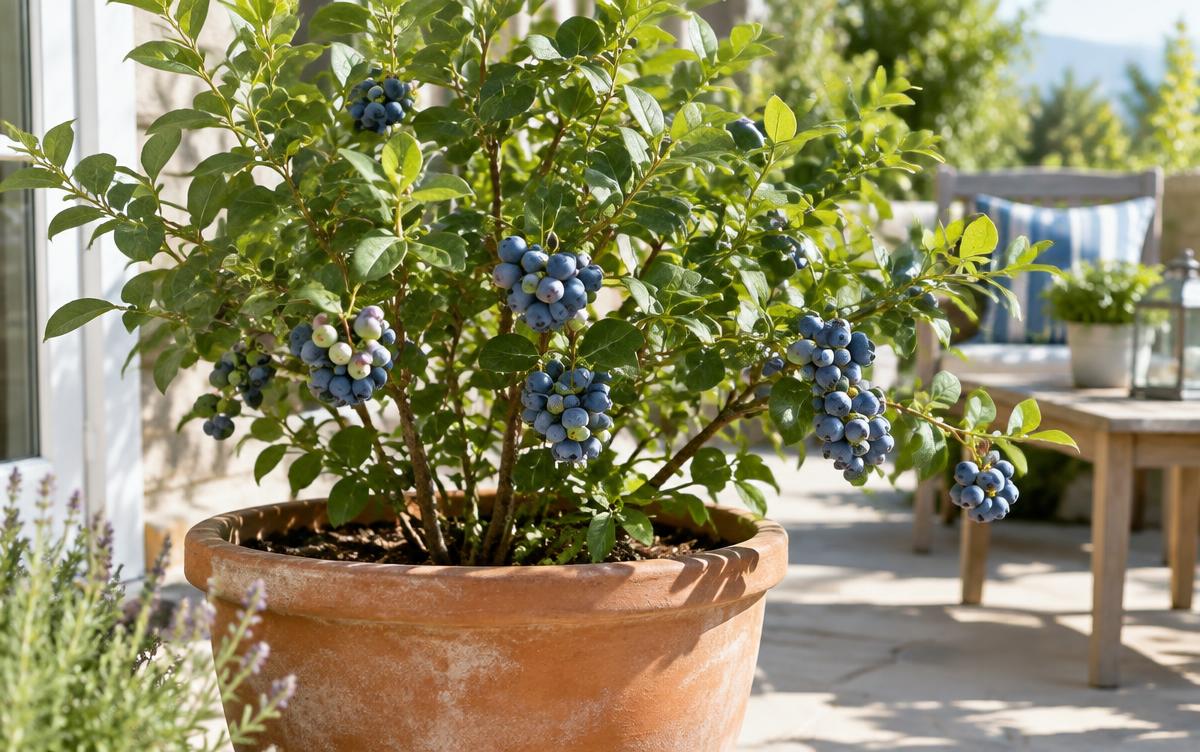
Blueberries are one of the best fruits to grow in a pot. They stay compact, look attractive all year and, crucially, a container lets you give them the acidic soil they need — something many garden beds cannot provide. With the right variety, mix and watering routine, a single large pot can produce several pints of berries each summer.
Blueberries fall into a few broad groups. Northern highbush varieties need cold winters; southern highbush and rabbiteye types suit warmer climates with fewer chill hours. Compact 'half-high' varieties are bred specifically for containers. Check which group suits your climate zone using your local cooperative extension service.
Many blueberries crop better with a second variety nearby for cross-pollination, even if they are labeled self-fertile. Two pots of different varieties that flower at the same time usually give larger, more numerous berries.
Start with a pot at least 16–20 inches (40–50 cm) wide with drainage holes, and move up in size as the plant grows. Blueberries need acidic soil, ideally pH 4.5 to 5.5. Do not use ordinary garden soil. Instead, use a potting mix formulated for acid-loving plants, or blend peat-free ericaceous compost with pine bark fines for drainage.
Blueberries fruit best in full sun — at least six to eight hours a day. In very hot climates, light afternoon shade helps prevent stress. Containers dry out and heat up faster than the ground, so avoid placing dark pots against hot walls in summer.
Blueberries have shallow, fine roots and dislike drying out. Keep the mix evenly moist but never waterlogged; in summer this can mean daily watering. Where tap water is hard (alkaline), it can gradually raise soil pH. Rainwater is ideal when available.
Feed in spring with a fertilizer designed for acid-loving plants, following label rates — container plants are easily over-fed. Avoid fertilizers containing nitrate nitrogen, which blueberries use poorly. For the first two years, removing flowers lets the plant build roots; from year three, prune in late winter by cutting out dead, weak and the oldest unproductive canes.
Berries are ripe when fully blue with no red near the stem, and they come away with a gentle touch. They do not sweeten after picking, so wait a few days after they turn blue. Netting protects the crop from birds.
A mature container blueberry commonly yields 1–5 pounds per season depending on variety, pot size and care.
They need winter chilling and lots of light, so blueberries generally do best outdoors on a patio or balcony.
Yellow leaves with green veins often indicate soil pH is too high. Test the soil and use acidic mix or rainwater.
Every two to three years, in late winter or early spring, move it into a slightly larger pot with fresh acidic mix.
This article is for general information only and isn't a substitute for professional medical advice. See our disclaimer.
Growing Fruit
Which fruits grow well in pots, how to choose containers, soil and feeding for a balcony harvest.
El Madhoun Mohamed · June 18, 2026 · 8 min read

Fruit Nutrition
Blueberries, raspberries, strawberries and blackberries compared: fiber, vitamin C, polyphenols, and how to eat more of them on a budget.
El Madhoun Mohamed · October 8, 2026 · 9 min read
Growing Fruit
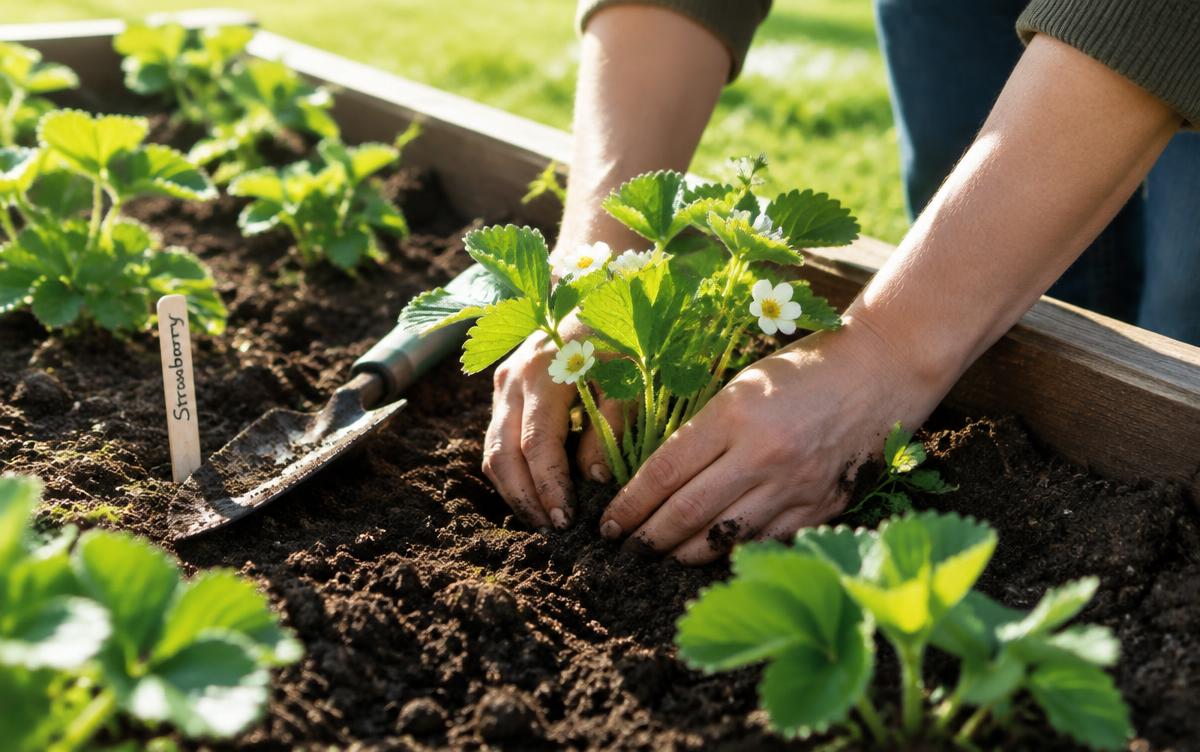
A beginner's guide to growing strawberries in beds, pots or hanging baskets — choosing varieties, planting, watering, feeding and protecting your crop.
El Madhoun Mohamed · September 20, 2026 · 10 min read