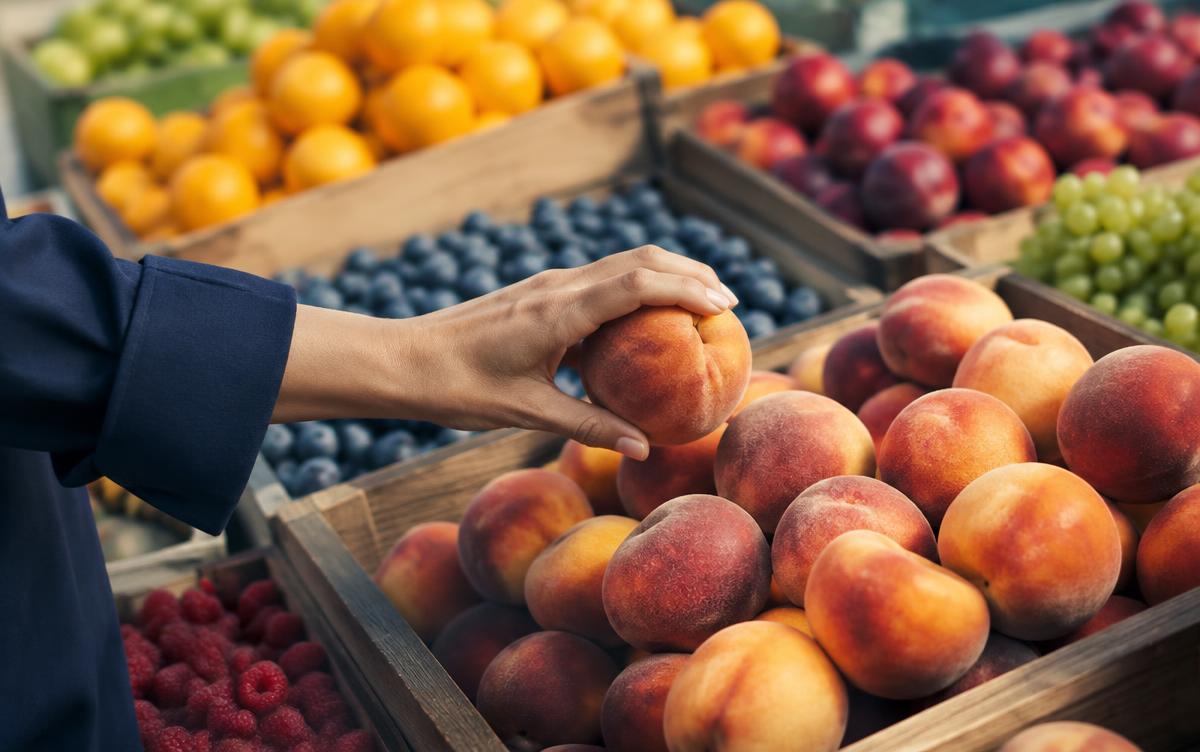
Buying Guides
How to Choose Ripe Fruit at the Store: A Fruit-by-Fruit Guide
Look, smell and touch tests for picking ripe melons, avocados, pineapples, berries and more.
El Madhoun Mohamed · September 25, 2026 · 8 min read
Buying Guides
Compare common pear varieties by flavor, texture and best use, and learn the 'check the neck' trick for knowing when a pear is ripe.
By Frutino Editorial Team · Published November 1, 2026 · 6 min read
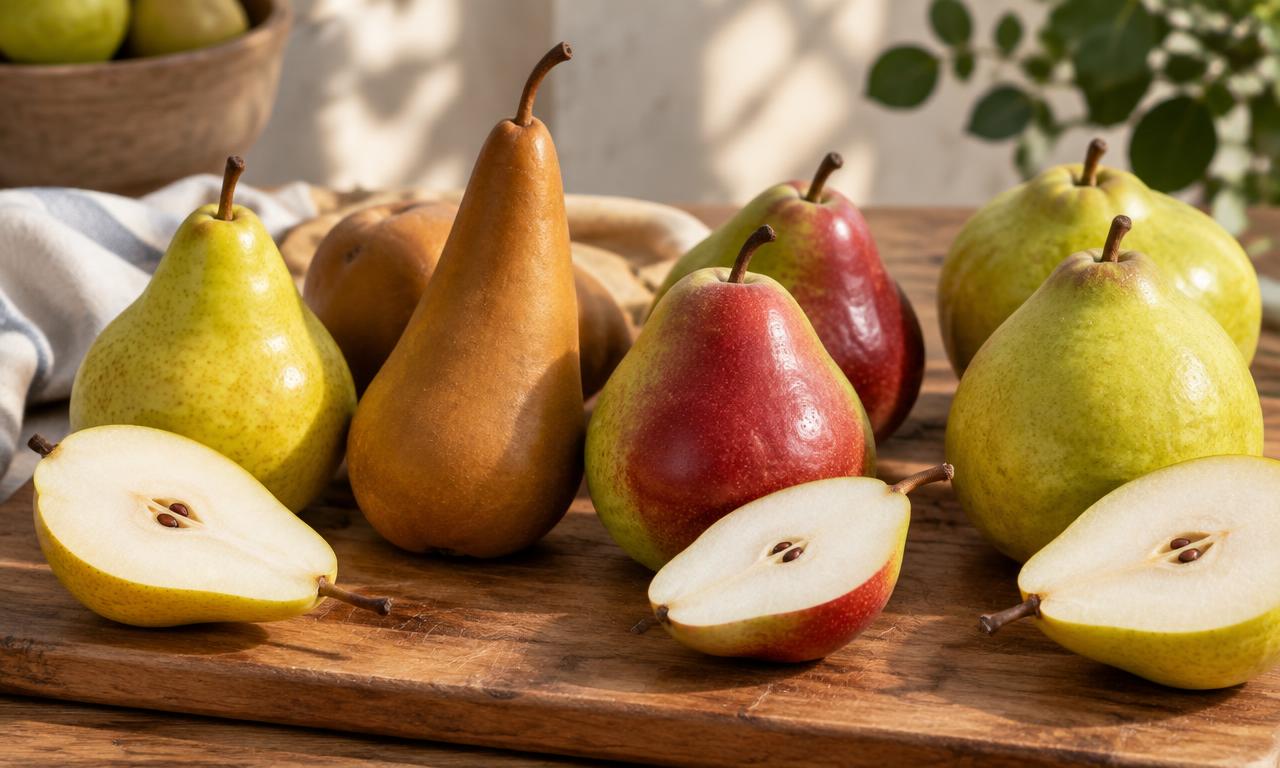
Pears are unusual: they ripen best off the tree, so most are sold firm. Each variety has its own texture and best use, and the color of the skin is not always a reliable ripeness sign. This guide helps you pick the right pear and know when it is ready.
Characteristics of pears commonly found in stores:
USA Pears recommends the 'check the neck' method: press gently near the stem with your thumb. If it yields slightly, the pear is ripe and ready to eat. Pears ripen from the inside out, so waiting for the wide base to soften usually means the center is overripe.
Leave firm pears at room temperature to ripen; a paper bag with a banana or apple speeds it up through ethylene. Once ripe, refrigerate to slow further ripening and eat within about 3–5 days.
According to USDA FoodData Central, one medium pear (about 178 g) provides roughly 100 calories and around 5.5 g of fiber, making it one of the higher-fiber common fruits. Much of that fiber is in the skin, so eat it unpeeled after washing.
European pears are picked mature but unripe because they ripen better and with smoother texture off the tree.
Bosc, followed by firm Anjou, because they keep their shape when cooked.
Pears contain 'stone cells' that give a slightly grainy texture; amount varies by variety and ripeness.
No. They are sold ready to eat and stay crisp in the refrigerator for weeks.
This article is for general information only and isn't a substitute for professional medical advice. See our disclaimer.
Buying Guides
Look, smell and touch tests for picking ripe melons, avocados, pineapples, berries and more.
El Madhoun Mohamed · September 25, 2026 · 8 min read
Buying Guides
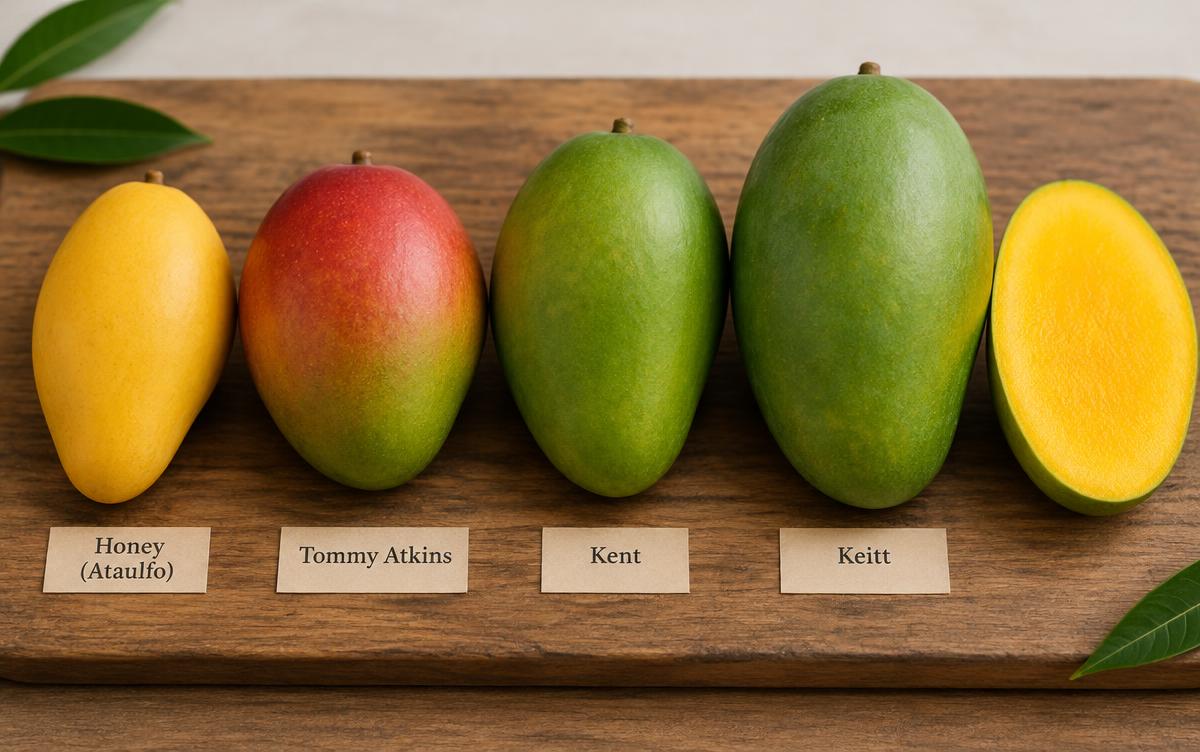
Compare the most common supermarket mangoes — Honey (Ataulfo), Tommy Atkins, Kent, Keitt and Haden — by flavor, fiber, season and best use, plus how to tell when each is ripe.
Frutino Editorial Team · October 23, 2026 · 7 min read
Fruit Nutrition
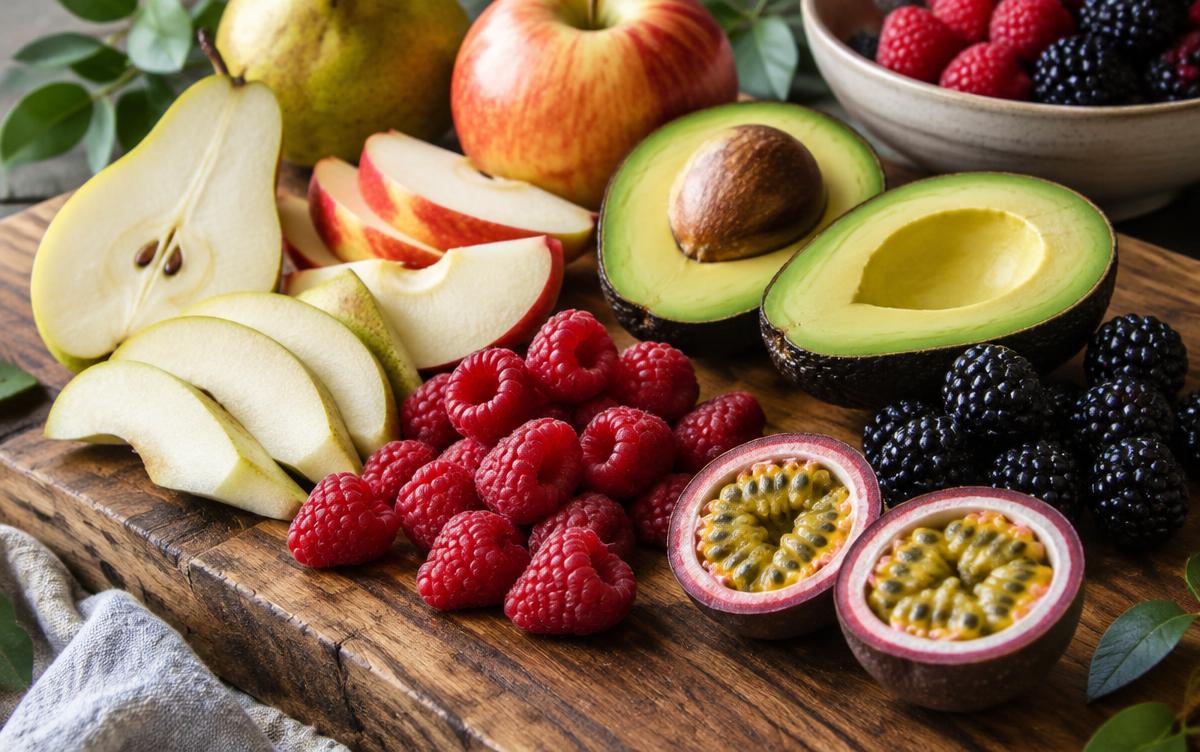
Raspberries, pears, apples, avocado and more ranked by fiber per serving, with tips to reach your daily fiber target comfortably.
El Madhoun Mohamed · October 11, 2026 · 8 min read