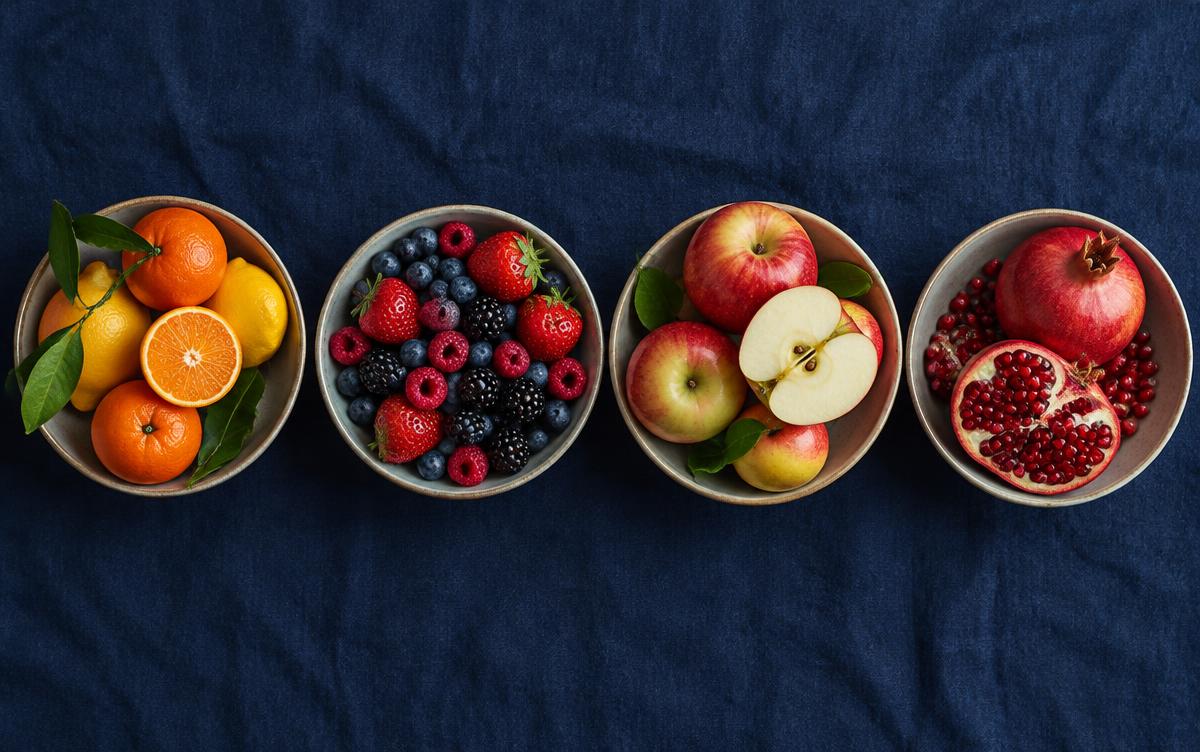
Seasonal Guides
The Seasonal Fruit Calendar: What to Eat Each Month
A month-by-month guide to fruit at its peak in the Northern Hemisphere, with tips for buying in season.
Claire Moreau · August 28, 2026 · 9 min read
Seasonal Guides
Fuyu vs Hachiya, why unripe persimmons are so astringent, how to ripen them properly, and the best ways to eat this underrated autumn fruit.
By Claire Moreau, Registered Dietitian & Senior Food Researcher · Updated October 9, 2026 · 7 min read · Fact-checked
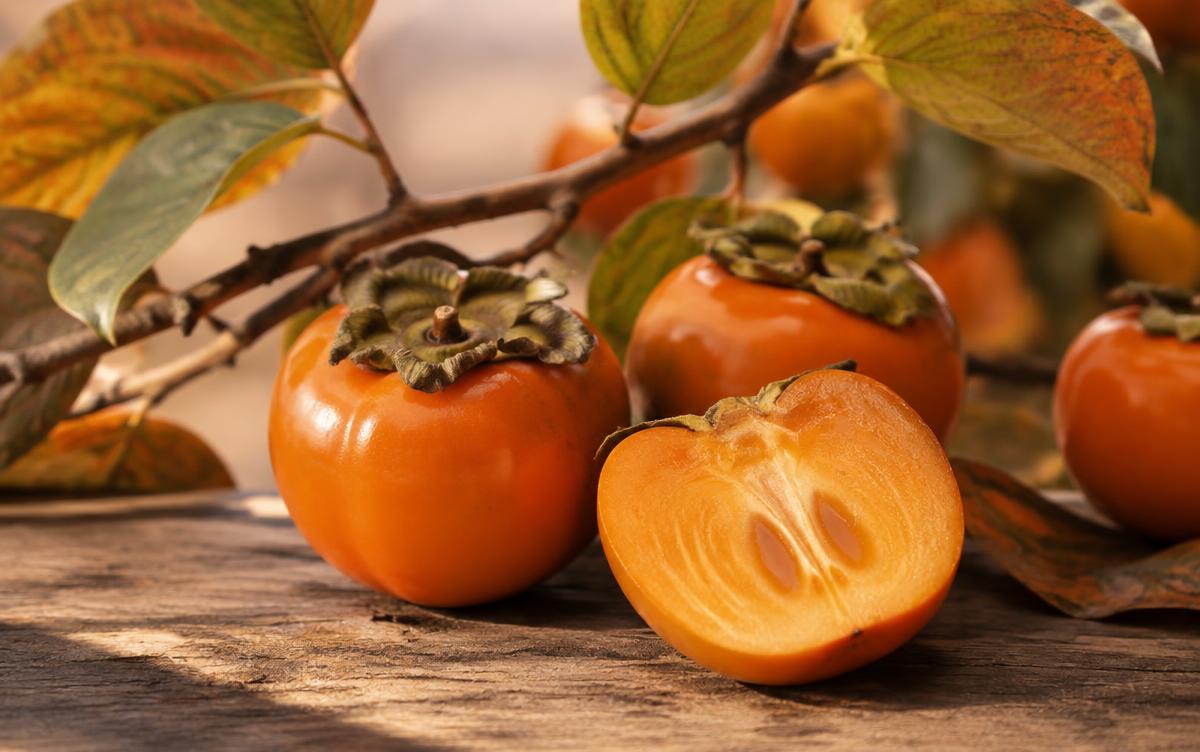
The persimmon may be the most rewarding fruit most people have never tried. Glossy, honey-sweet and available just as summer fruit disappears, it fills the autumn gap beautifully — as long as you know the one crucial rule: some persimmons must be completely soft before you eat them, and getting that wrong is an experience you will not forget.
Almost every persimmon in shops is one of two types, and they behave completely differently:
That mouth-puckering sensation comes from soluble tannins, the same compounds that make strong tea and young red wine grip your mouth. As a Hachiya ripens, its tannins bind into an insoluble form and the astringency disappears, leaving pure sweetness. Fuyu-type fruit were bred to lose their tannins while still firm, which is why they can be eaten crisp.
If you bite into a firm Hachiya by mistake, the sensation fades within minutes and is harmless — just memorable.
Persimmons ripen at room temperature over several days. To hurry a Hachiya along, place it in a paper bag with a banana or apple — the ethylene speeds softening considerably. You will know a Hachiya is ready when it feels heavy, the skin turns deep translucent orange, and the flesh gives like a full water balloon. Any firmness at the shoulders means waiting longer.
If you have more ripe fruit than you can eat, the pulp freezes well. Scoop it out, freeze in portions, and use it later in baking, smoothies or sauces.
Fuyu persimmons are the versatile ones. Slice them into salads with bitter leaves, walnuts and a sharp cheese; cut them into wedges for lunchboxes; or dice them into salsa with lime and chili. Their crisp texture holds up where a softer fruit would collapse.
Ripe Hachiya pulp is a dessert ingredient in disguise. Eat it straight from the skin with a spoon, swirl it through yogurt or porridge, or use it in baking — classic persimmon pudding and bread rely on its honeyed, almost date-like sweetness. In Japan, Hachiyas are traditionally dried whole (hoshigaki), a slow process that concentrates them into something like a natural fruit confection.
Look for smooth, glossy, unblemished skin with the calyx (the leafy cap) still attached. For Fuyu, firm fruit with deep orange color is ready to eat. For Hachiya, buy firm fruit and ripen at home, or choose already-soft fruit only if you will eat it the same day — a fully ripe Hachiya is fragile and travels badly.
Keep firm persimmons at room temperature. Once ripe, refrigerate and eat within two or three days.
One persimmon provides around 120 calories, 6 g of fiber, a substantial amount of vitamin A (as beta-carotene, which gives the flesh its color), plus vitamin C and manganese. It is one of the more filling fruits you can eat in autumn, and its sweetness makes it a genuinely satisfying stand-in for dessert.
Yes, the skin is edible on both types. Many people prefer to peel Hachiyas or simply scoop the pulp, but Fuyu skin is thin and pleasant to eat.
You ate an astringent type (Hachiya) before it was fully soft. The tannins cause the sensation; it passes quickly and the fruit is fine once completely ripe.
In the Northern Hemisphere, roughly October through December, with imported fruit extending the season either side.
Absolutely. Ripe Hachiya pulp works in puddings, breads, cakes and smoothies; firm Fuyu slices can be roasted, added to salads, or baked into tarts.
This article is for general information only and isn't a substitute for professional medical advice. See our disclaimer.
Seasonal Guides
A month-by-month guide to fruit at its peak in the Northern Hemisphere, with tips for buying in season.
Claire Moreau · August 28, 2026 · 9 min read
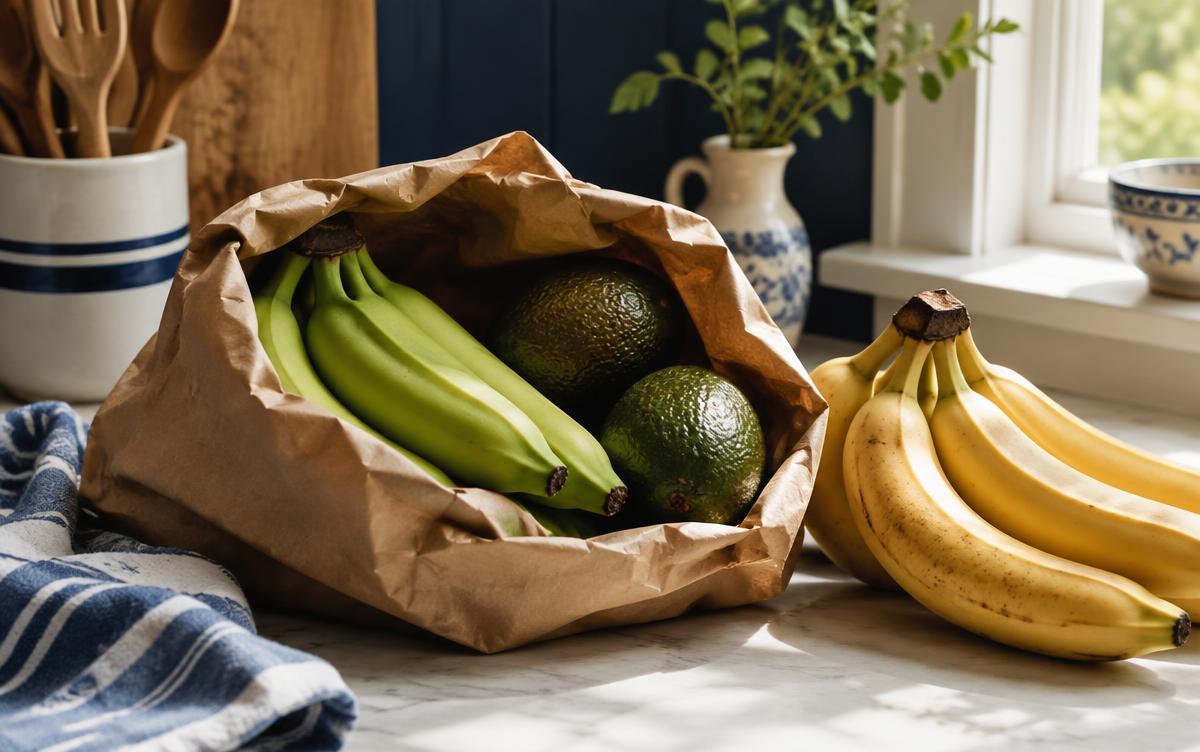
Storage & Ripening
Use the paper bag method, ethylene and temperature to control how quickly fruit ripens.
Claire Moreau · August 10, 2026 · 5 min read