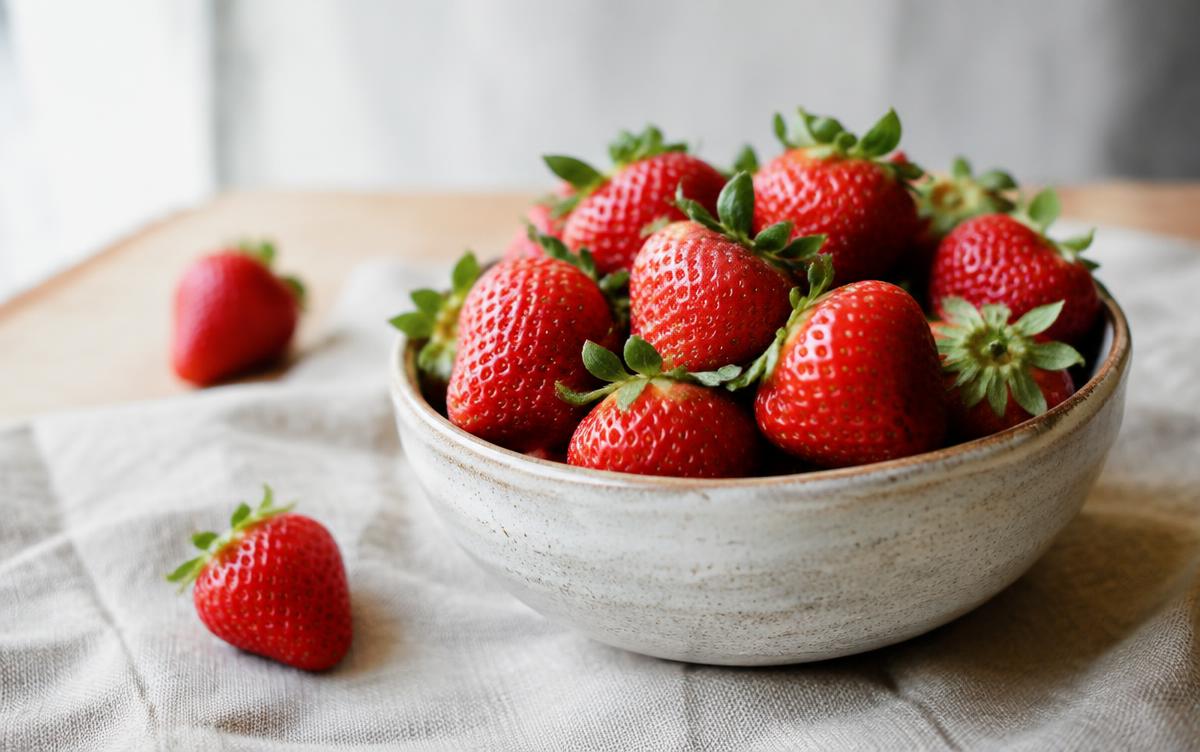
Why strawberries are one of the most nutrient-dense fruits, how to pick the best punnet, wash them properly and stop them going moldy.
Strawberries are the most popular berry in much of the world, and for good reason. They are sweet without being high in sugar, they deliver more vitamin C per serving than an orange, and they are easy to eat by the handful. They are also notoriously fragile: a punnet can go from perfect to moldy in two days. This guide covers what strawberries offer nutritionally, how to choose them, and the simple handling habits that make them last.
What is in a serving of strawberries
A cup of halved strawberries, roughly 150 grams, contains about 50 calories, 3 grams of fiber and around 7 grams of natural sugar. The standout nutrient is vitamin C: that same cup provides roughly 85 to 90 milligrams, which meets or exceeds the daily needs of most adults. Strawberries also supply folate, potassium and manganese.
Their red color comes from anthocyanins, and they contain other polyphenols such as ellagic acid. These compounds are the reason strawberries appear frequently in research on heart health and blood sugar control.
What the research suggests
Controlled trials have found that eating strawberries daily for several weeks can modestly improve cholesterol levels and reduce markers of inflammation, particularly in people with excess weight or metabolic syndrome. Studies that pair strawberries with a high-carbohydrate meal have also shown a gentler rise in blood sugar afterwards, likely because of their fiber and polyphenols.
These effects are modest and depend on regular intake as part of an overall healthy diet. Strawberries are a helpful food, not a treatment, but few foods give so much nutrition for so few calories.
How to choose good strawberries
Strawberries do not ripen further after picking, so what you buy is what you get. Look for:
- Deep, even red color right up to the green cap; white shoulders mean they were picked early
- Fresh, bright green caps rather than dry or brown ones
- A glossy surface and firm texture, with no soft or weeping spots
- A strong sweet smell — scent is one of the best clues to flavor
- A clean, dry container base with no juice stains or mold
How to wash strawberries properly
Wash strawberries only just before eating. Rinse them in a colander under cool running water with the caps still on, which stops water from soaking into the fruit and diluting the flavor. Pat them dry with a clean towel, then hull them.
Some people soak strawberries in a dilute vinegar solution (about one part vinegar to three parts water) for a few minutes to reduce surface mold spores. This can extend shelf life if you plan to eat them over several days, but rinse them well afterwards and dry them thoroughly.
Storing strawberries so they last
Moisture and bruising are the main enemies. These habits make a real difference:
- Sort the punnet as soon as you get home and remove any soft or moldy berries
- Line a container with paper towel and spread the berries in a single layer
- Keep them unwashed and covered loosely in the fridge
- Eat within three to five days for the best flavor
- Bring them to room temperature for 20 minutes before eating; cold dulls their aroma
Freezing and using up extra strawberries
To freeze, wash, dry and hull the berries, then spread them on a tray and freeze until solid before transferring to a bag. This prevents them from freezing into one block. Frozen strawberries keep well for about eight to twelve months and are ideal in smoothies, compotes and baking.
Slightly soft strawberries that are still free of mold can be turned into a quick sauce: simmer them with a splash of water and a little lemon juice for ten minutes. It keeps for about five days in the fridge.
Frequently asked questions
Do strawberries have more vitamin C than oranges?
Per typical serving, yes. A cup of strawberries provides slightly more vitamin C than a medium orange.
Should I remove the green caps before washing?
No. Keep the caps on while washing to stop water from entering the fruit, then hull them afterwards.
Is one moldy strawberry a reason to throw out the whole punnet?
Not necessarily. Discard the moldy berry and any touching it, then check the rest carefully and eat them soon.
Can people with diabetes eat strawberries?
Generally yes. Strawberries are relatively low in sugar and high in fiber, making them a good fruit choice in sensible portions.
This article is for general information only and isn't a substitute for professional medical advice. See our disclaimer.