Make dried apple, banana, mango and citrus at home using an oven or a dehydrator: prep, pretreatments, temperatures, drying times, how to test dryness and how to store dried fruit safely.
Drying is one of the oldest ways to preserve fruit, and it is an excellent way to use up a glut of apples or a few over-ripe bananas. You do not need special equipment: a standard oven on its lowest setting works well. This guide explains how to prepare, dry, test and store fruit so it stays safe and tasty for months.
Best fruits for drying
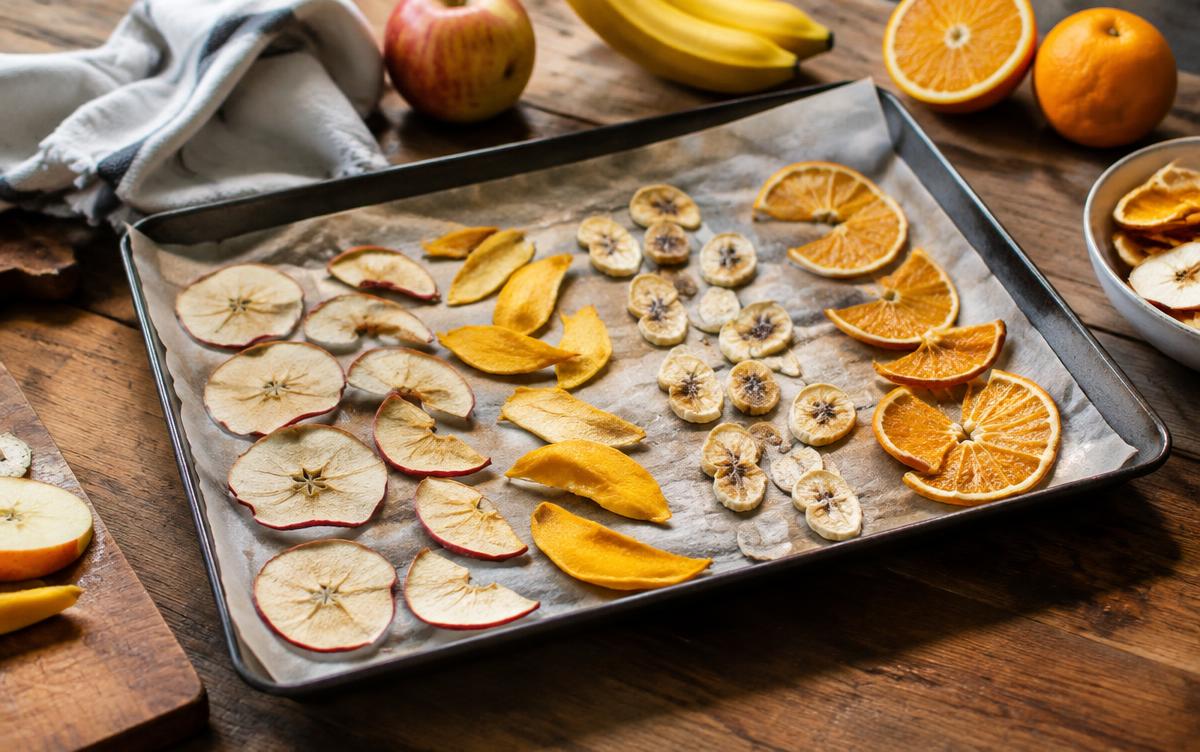
Firm, ripe fruit with good flavor dries best. Beginner-friendly choices include:
- Apples and pears — sliced into rings or wedges.
- Bananas — sliced into coins.
- Mango and pineapple — sliced into strips.
- Citrus — thin wheels, great for snacks, tea and decoration.
- Strawberries — halved or sliced.
Prepare the fruit
Wash fruit thoroughly, remove pits, cores and bruised areas, and slice evenly — about 1/4 inch (6 mm) thick. Even slices dry at the same rate. To prevent light-colored fruit such as apples, pears and bananas from browning, dip slices for a few minutes in a solution of lemon juice and water or an ascorbic acid (vitamin C) solution, as recommended by the National Center for Home Food Preservation.
Oven method
Set the oven to its lowest temperature, ideally around 140°F (60°C). Arrange slices in a single layer on parchment-lined trays or a wire rack over a tray. Prop the oven door open slightly with a wooden spoon so moisture can escape, and rotate the trays every hour. Most fruit takes 6–12 hours depending on thickness and moisture.
Dehydrator method
A food dehydrator gives more even results and uses less energy. Food-preservation guidance generally recommends drying fruit at 135–140°F (57–60°C). Leave space between pieces for airflow and check from about six hours onward.
How to tell when fruit is dry
Properly dried fruit is leathery and pliable with no pockets of moisture. Tear a cooled piece in half and squeeze it: no moisture should appear. Apples and citrus can be dried until crisp if you prefer chips.
Conditioning and storage
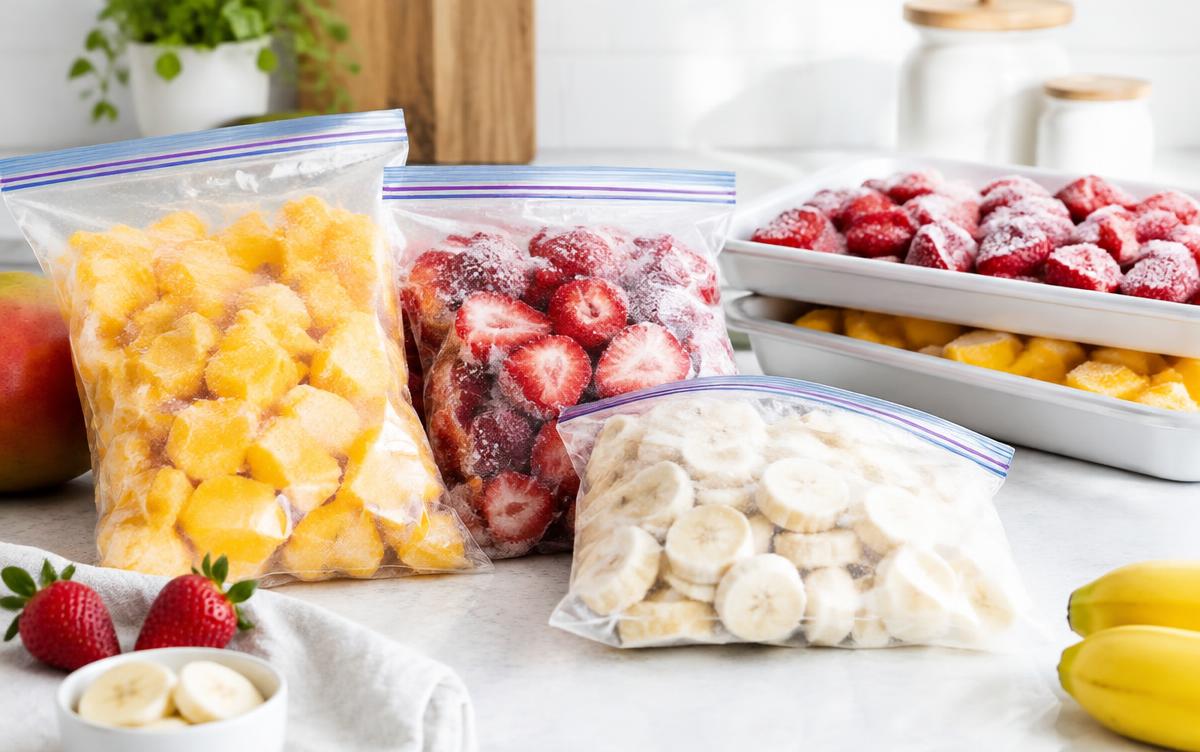
Because pieces dry unevenly, 'condition' the fruit: once cool, pack it loosely in a glass jar, close it and shake daily for 7–10 days. If condensation appears, return the fruit to the oven or dehydrator. Then store in airtight containers in a cool, dark place. Most dried fruit keeps well for 6–12 months; freezing extends this further.
A note on sugar and portions
Drying removes water, not sugar, so dried fruit is much more concentrated. A small handful of dried fruit can contain as much sugar as a full portion of fresh fruit. Enjoy it as a snack in modest portions, ideally alongside nuts or yogurt.
Frequently asked questions
Can I dry fruit in an air fryer?
Some air fryers have a dehydrate setting at low temperature. Without one, standard air fryer temperatures are too hot and will cook rather than dry the fruit.
Why is my dried fruit sticky?
Sticky fruit is often under-dried or very high in sugar. Dry a little longer and condition it before storing.
Do I need to add sugar?
No. Ripe fruit is naturally sweet; drying intensifies its sweetness.
How do I know if dried fruit has spoiled?
Discard any fruit showing mold, off smells or moisture inside the jar.
Sources and further reading
This article is for general information only and isn't a substitute for professional medical advice. See our disclaimer.