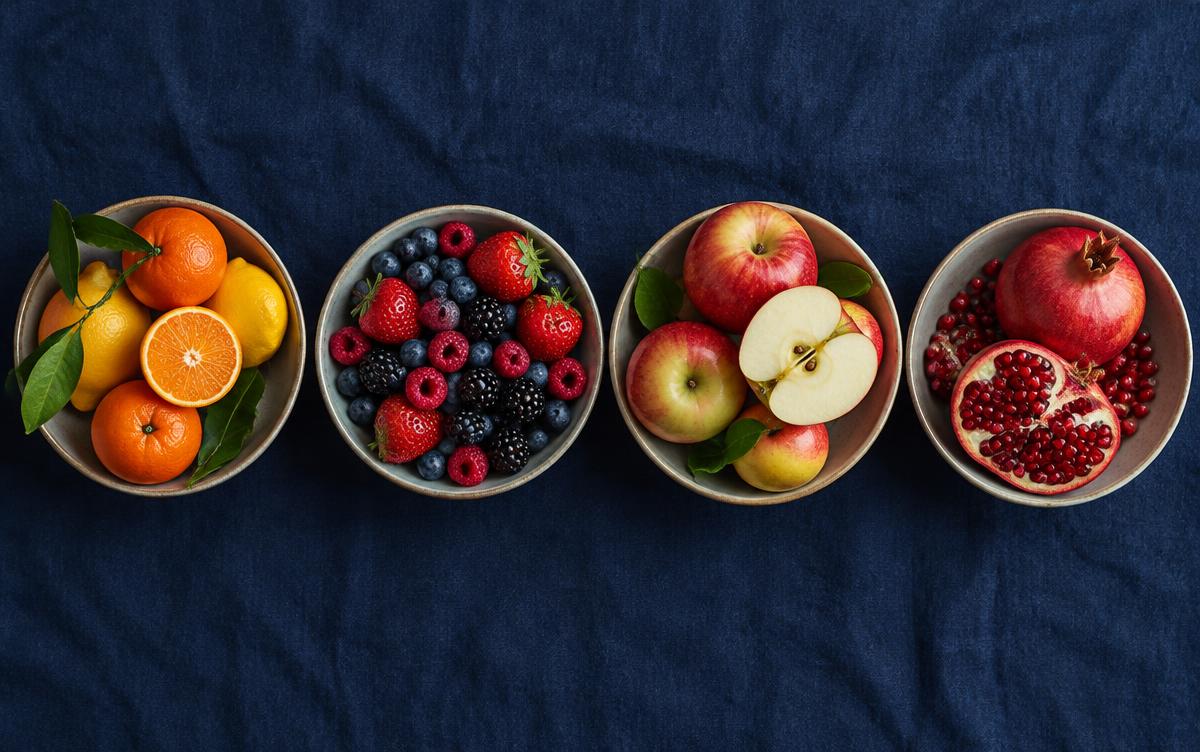
Seasonal Guides
The Seasonal Fruit Calendar: What to Eat Each Month
A month-by-month guide to fruit at its peak in the Northern Hemisphere, with tips for buying in season.
Claire Moreau · August 28, 2026 · 9 min read
Seasonal Guides
A practical guide to fresh and dried figs: fiber and mineral content, common varieties, choosing ripe figs, storage and kitchen uses.
By Claire Moreau, Registered Dietitian & Senior Food Researcher · Updated October 10, 2026 · 8 min read · Fact-checked
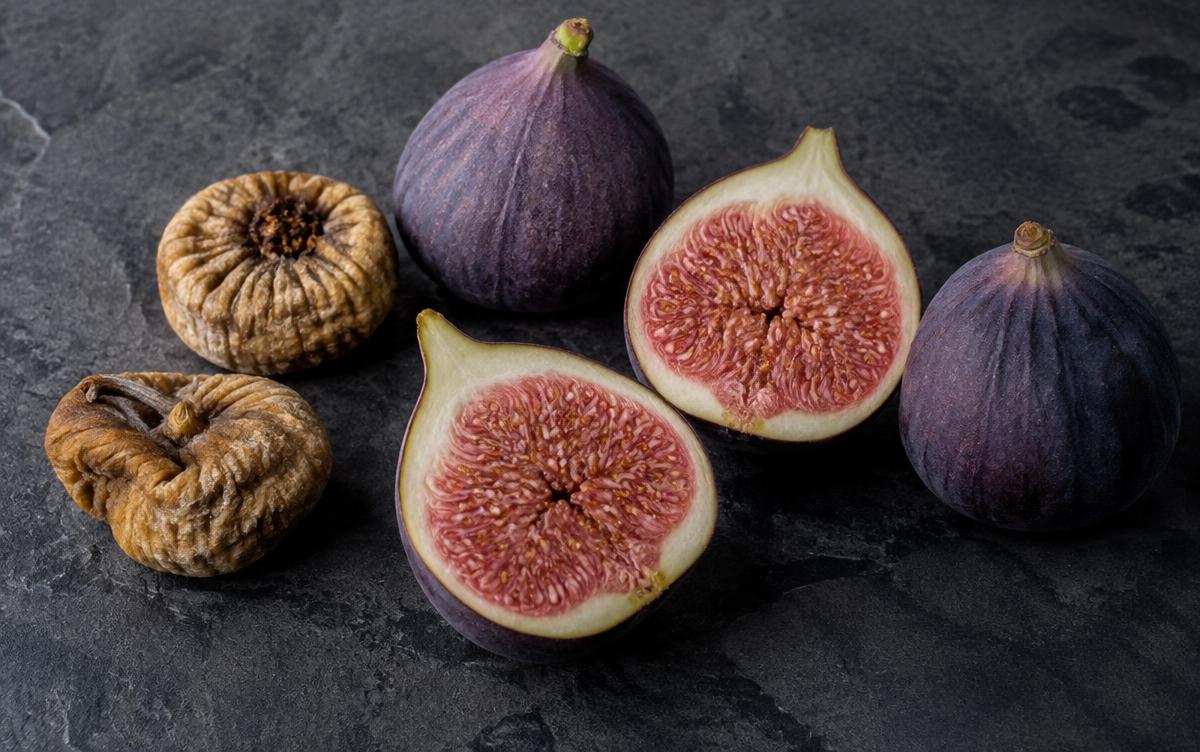
Figs are one of the oldest cultivated fruits, eaten across the Mediterranean and Middle East for thousands of years. Fresh figs have a short, late-summer season and a soft, jammy interior; dried figs are available all year and are among the most fiber-rich fruits you can buy. Both deserve a place in the kitchen.
A medium fresh fig, around 50 grams, contains about 37 calories, 1.5 grams of fiber and 8 grams of sugar. Drying removes most of the water, so nutrients become concentrated. A 40-gram portion of dried figs — about two or three figs — provides roughly 100 calories, 4 grams of fiber and 19 grams of natural sugar.
Dried figs are a notable plant source of calcium, potassium, magnesium and iron. For people who eat little dairy, they make a useful contribution to calcium intake, though they should not be relied on as a sole source.
Figs have long been used as a gentle remedy for constipation, and modern research supports this. Small clinical trials have found that eating dried figs daily improved stool frequency and comfort in people with chronic constipation. The effect comes from their fiber, including the tiny seeds, and natural sugars that draw water into the gut.
Because of this, it is wise to introduce dried figs gradually if you are not used to high-fiber foods, and drink enough water.
You will most often see these varieties in shops and markets:
Fresh figs do not ripen much after picking, so buy them ready to eat. A ripe fig is soft to the touch, slightly drooping at the stem, and may show small cracks in the skin. Avoid figs that smell sour or have wet, leaking bases.
Store fresh figs in a single layer in the fridge and eat within two to three days. Let them come to room temperature before eating for the best flavor. Dried figs keep for months in an airtight container in a cool, dark cupboard, or longer in the fridge.
Figs are versatile in both sweet and savory dishes:
Some people with a latex or birch pollen allergy react to figs. Dried figs are calorie-dense and high in sugar, so portions matter for people managing their weight or blood sugar. Fig leaves and unripe fig sap can irritate the skin in sunlight, so wear gloves when picking from a tree.
Neither is strictly healthier. Dried figs are more concentrated in fiber and minerals but also in sugar and calories, so smaller portions are needed.
Yes. The skin of fresh figs is thin and edible; simply remove the stem.
In the Northern Hemisphere, usually late summer to early autumn, with some varieties producing a small early crop in June.
Studies suggest that regularly eating dried figs can improve constipation, thanks to their high fiber content.
This article is for general information only and isn't a substitute for professional medical advice. See our disclaimer.
Seasonal Guides
A month-by-month guide to fruit at its peak in the Northern Hemisphere, with tips for buying in season.
Claire Moreau · August 28, 2026 · 9 min read
Fruit Nutrition
A clear look at natural sugars in fruit, how fiber changes their effect, and which fruits are lower in sugar.
Claire Moreau · September 2, 2026 · 7 min read