A simple formula for balanced fruit smoothies: how much fruit to use, adding protein, fiber and greens, choosing a liquid, and keeping sugar in check without losing flavor.
A smoothie can be a quick, nourishing breakfast — or a glass of sugar that leaves you hungry an hour later. The difference comes down to proportions. This guide gives you a flexible formula for building smoothies that include whole fruit, protein and fiber, so they taste great and keep you satisfied.
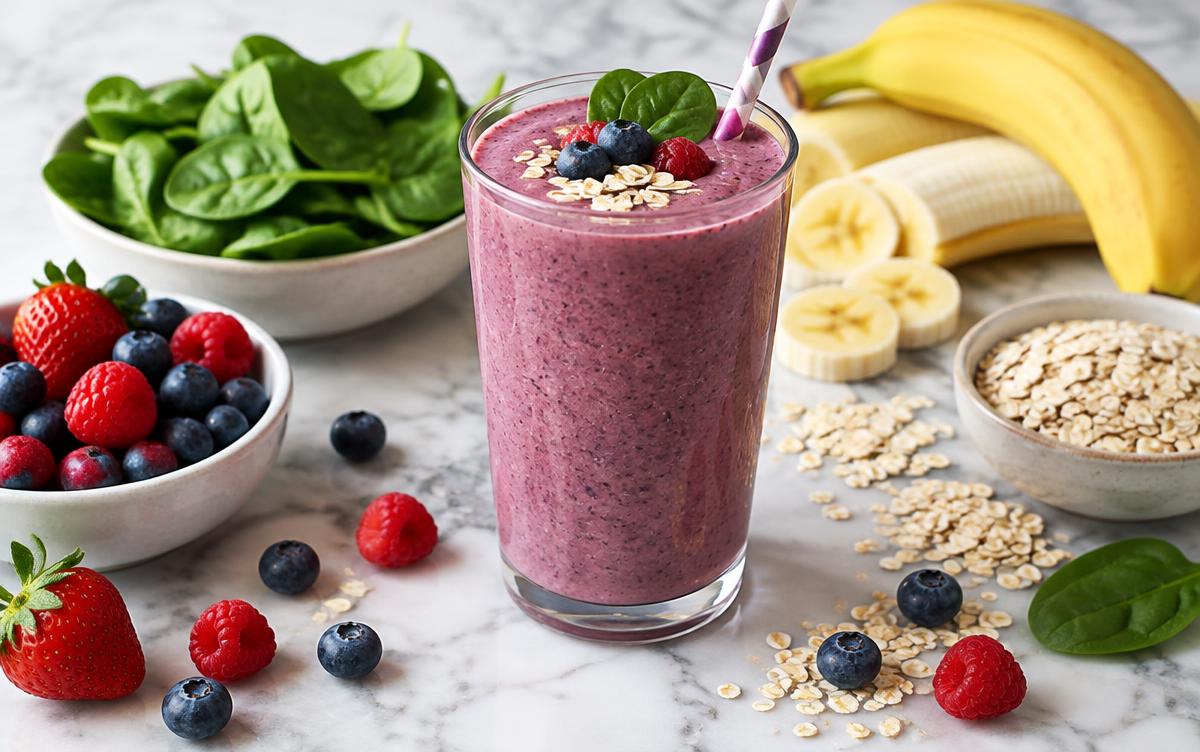
For one large smoothie (about 16 oz / 475 ml), start with:
- Fruit: 1 to 1½ cups (about one to two servings), fresh or frozen.
- Protein: Greek yogurt, kefir, milk, soy milk, silken tofu or a scoop of protein powder.
- Fiber and fat: 1 tablespoon of chia, flax, oats, nut butter or a quarter avocado.
- Greens (optional): a handful of spinach or kale.
- Liquid: ½ to 1 cup of milk, unsweetened plant milk or water.
Why whole fruit beats juice
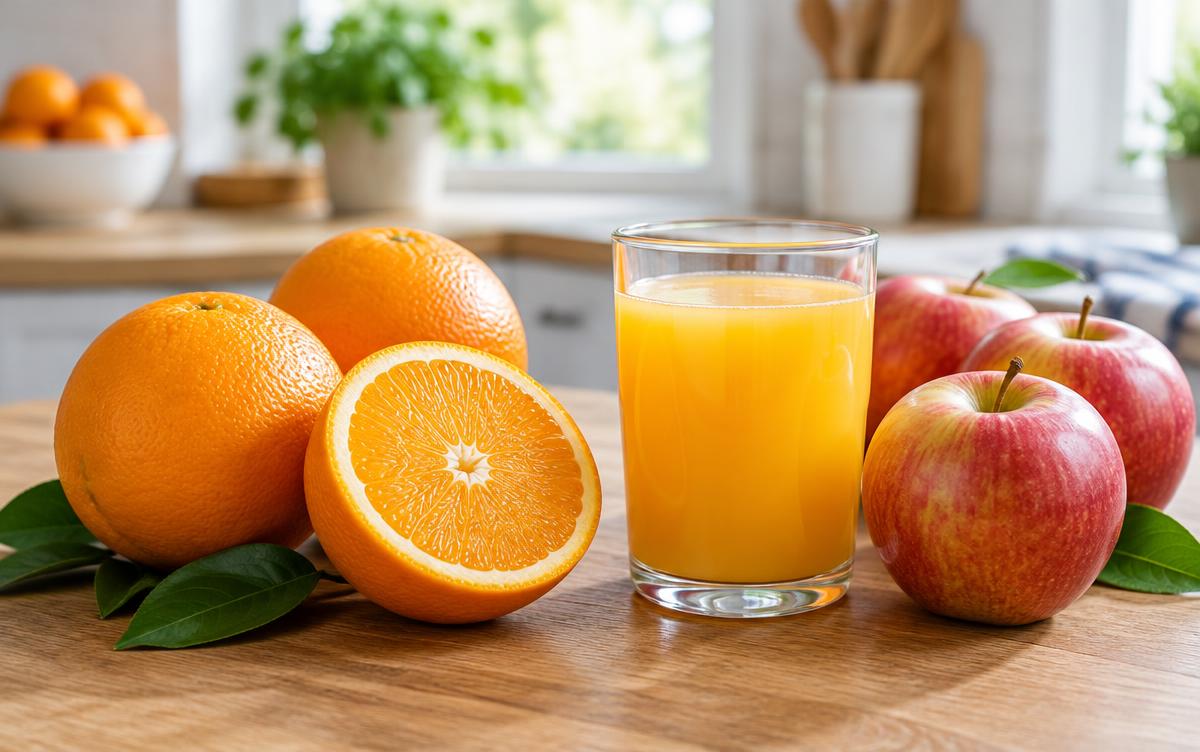
Blending keeps the fruit's fiber in the drink, unlike juicing, which removes most of it. Fiber slows sugar absorption and adds fullness. Using fruit juice as the liquid, however, adds a lot of sugar with little fiber — the Dietary Guidelines for Americans encourage choosing whole fruit over juice for most of your fruit intake.
Keeping sugar in check
Smoothies are easy to over-fill. A few habits help:
- Stick to about two servings of fruit per smoothie.
- Skip added sugar, honey and syrups — ripe or frozen banana adds natural sweetness.
- Favor lower-sugar fruits such as berries, kiwi and citrus, and mix them with one sweeter fruit like mango or banana.
- Add protein and fat, which slow digestion and help you stay full.
- Watch portion size; a 32 oz smoothie can contain the fruit of several snacks.
Three balanced combinations
Try these as starting points:
- Berry oat: 1 cup mixed frozen berries, ½ banana, ¾ cup Greek yogurt, 2 tbsp oats, milk to blend.
- Green kiwi: 2 kiwis, 1 cup spinach, ½ frozen banana, 1 tbsp chia, unsweetened almond milk.
- Mango citrus: ¾ cup frozen mango, 1 peeled orange, ½ cup kefir, 1 tbsp flaxseed, water to blend.
Prep and storage tips
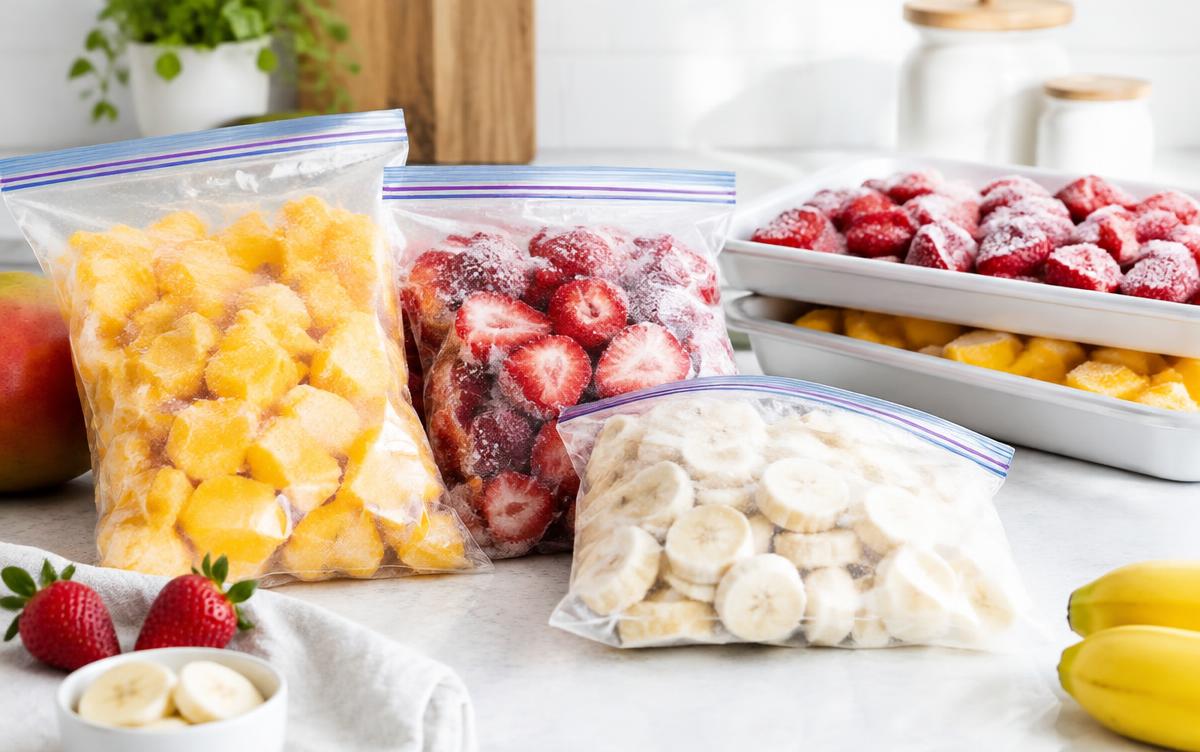
Freeze ripe fruit in portions so smoothies are thick and cold without ice. Smoothie 'packs' of fruit, greens and seeds can be frozen in bags for up to three months. A blended smoothie is best drunk immediately but keeps up to 24 hours in a sealed jar in the fridge; shake before drinking.
Frequently asked questions
Do smoothies count toward my daily fruit?
Yes. The whole fruit in a smoothie counts toward your fruit intake. Fruit juice counts too, but whole fruit is the better choice for most of it.
Is a smoothie good for weight loss?
A balanced smoothie with protein and fiber can replace a meal, but large, fruit-heavy smoothies add calories quickly. Portion size matters.
Can people with diabetes drink smoothies?
Often yes, with smaller fruit portions plus protein and fiber. Anyone managing diabetes should follow their healthcare team's advice.
Should I add ice?
Frozen fruit gives a thicker texture without diluting the flavor, so ice is usually unnecessary.
Sources and further reading
This article is for general information only and isn't a substitute for professional medical advice. See our disclaimer.