Fruit Nutrition
Fruit Sugar Explained: Should You Worry About Fructose?
A clear look at natural sugars in fruit, how fiber changes their effect, and which fruits are lower in sugar.
Claire Moreau · September 2, 2026 · 7 min read
Fruit Nutrition
How juicing changes fiber, sugar, fullness and blood sugar response — and how to enjoy juice sensibly as part of a healthy diet.
By Claire Moreau, Registered Dietitian & Senior Food Researcher · Updated October 11, 2026 · 8 min read · Fact-checked
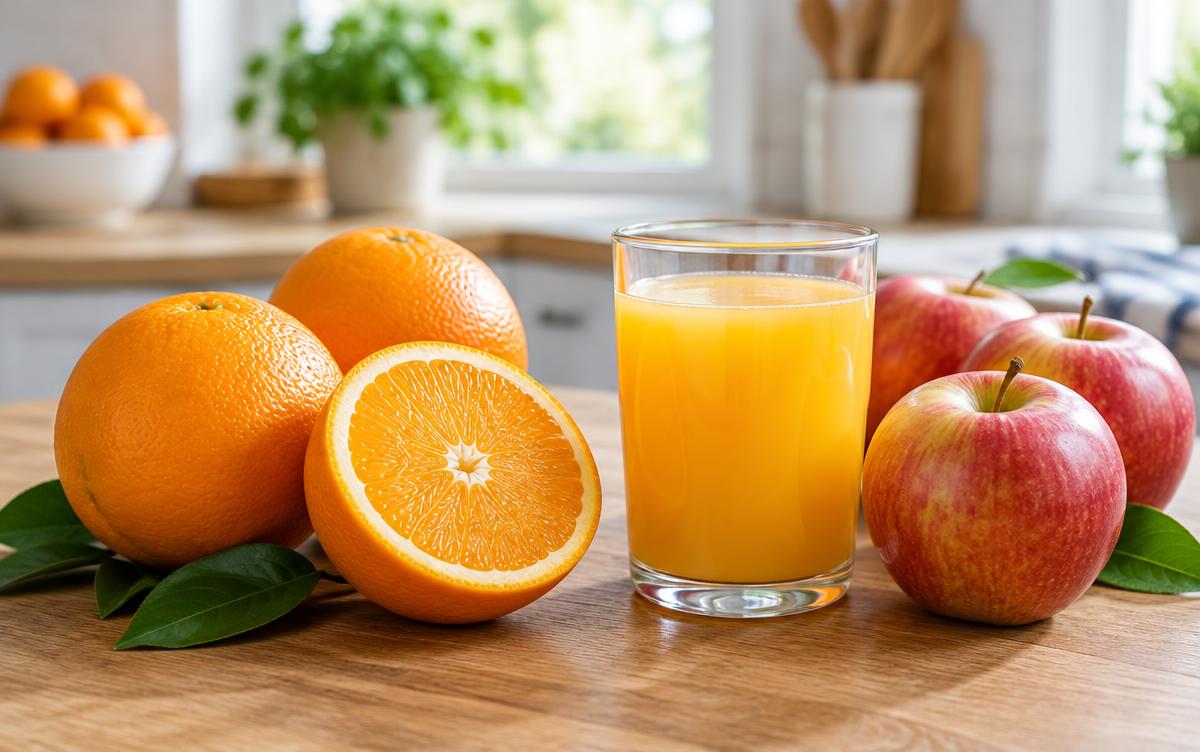
A glass of orange juice and an orange come from the same fruit, so it is natural to assume they are equal. Nutritionally, they are not. Juicing changes how the body handles the fruit's sugar and removes much of what makes whole fruit so filling. Here is what the evidence shows.
Juicing separates liquid from pulp, skin and membranes, which hold most of the fiber. A medium orange has about 3 g of fiber; a glass of orange juice has well under 1 g. Some vitamins survive juicing well, especially vitamin C, but the fiber does not.
A glass of juice also typically uses two to four fruits, so it delivers the sugar of several fruits at once, without the chewing and fiber that slow you down.
Whole fruit takes time to chew and its fiber slows digestion, so it is more filling and raises blood sugar more gently. Juice is absorbed quickly, is easy to drink in large amounts, and does little to reduce hunger. In large studies, higher whole fruit intake is linked with lower risk of type 2 diabetes, while regular fruit juice intake is not linked with the same benefit and in some studies with slightly higher risk.
Typical values for one medium orange versus a 250 ml glass of orange juice:
Juice is not a harmful drink in small amounts. UK guidance counts up to 150 ml of 100% juice as a maximum of one of your five a day, no matter how much you drink. It can be useful for people who need extra energy or struggle to eat solid food. Choose 100% juice with no added sugar and treat it as an occasional drink with a meal.
Smoothies blend the whole fruit, so they keep more fiber than juice. They are still easy to drink quickly, though. Adding yogurt, oats or nut butter makes a smoothie more filling and balanced.
It may taste fresher, but the fiber and sugar profile is similar. Both are best in small amounts.
In UK guidance, up to 150 ml of 100% juice counts as one portion per day, at most.
Generally yes, because blending keeps the fiber, but portion size still matters.
This article is for general information only and isn't a substitute for professional medical advice. See our disclaimer.
Fruit Nutrition
A clear look at natural sugars in fruit, how fiber changes their effect, and which fruits are lower in sugar.
Claire Moreau · September 2, 2026 · 7 min read
Fruit Nutrition
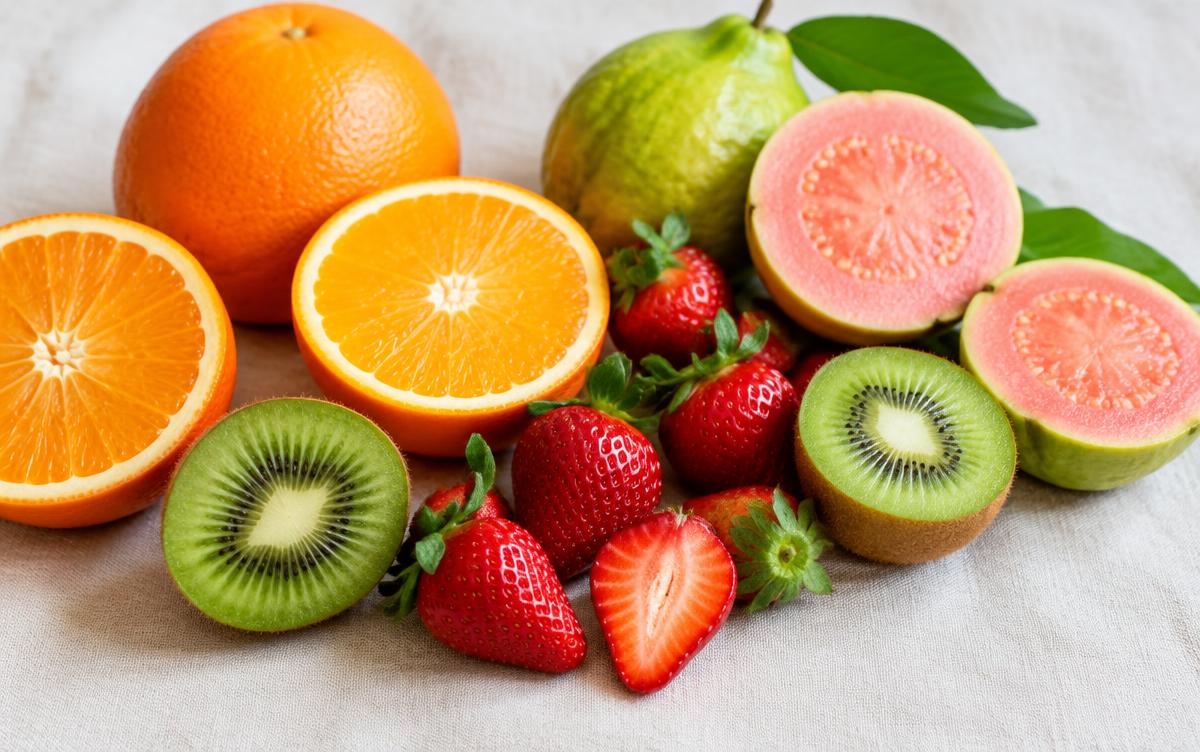
Guava, kiwi, strawberries, oranges and more ranked by vitamin C per serving, plus how much you need and how to keep vitamin C from breaking down.
Claire Moreau · October 11, 2026 · 8 min read